
The Best Age for a Child to Start Music Lessons: A Parent's Guide

Updated: Sep 15
One of the questions we hear most often from parents is:
"When should my child start music lessons?"
Many parents wonder about the best age to begin music lessons. Some worry that their child is too young, while others fear they may have missed the ideal window. The truth is, there is no single perfect age for every child. What matters most is choosing the right musical experience at the right stage of development.
Instead of asking, "How old should my child be?", a better question is:
"What type of music learning is right for my child right now?"
Ages 3–4: Building a Love for Music
At this age, children learn best through play and exploration. Most three and four-year-olds are still developing their attention span, listening skills, and coordination. Formal instrument lessons can sometimes feel overwhelming, but musical activities can have a huge positive impact.
Children in this age group benefit from:
Singing songs
Musical storytelling
Rhythm games
Dancing and movement activities
Exploring sounds and simple percussion instruments
The goal is not to create a musician overnight. Instead, we aim to help children associate music with enjoyment, confidence, and creativity. A child who enjoys music at four years old is far more likely to continue learning successfully later.
When Should Your Child Start Music Lessons? A Guide for Ages 5–6
For many children, this is an excellent age to begin regular music lessons. By this stage, children are usually able to:
Follow instructions more consistently
Focus for longer periods
Remember simple musical patterns
Practise short tasks independently
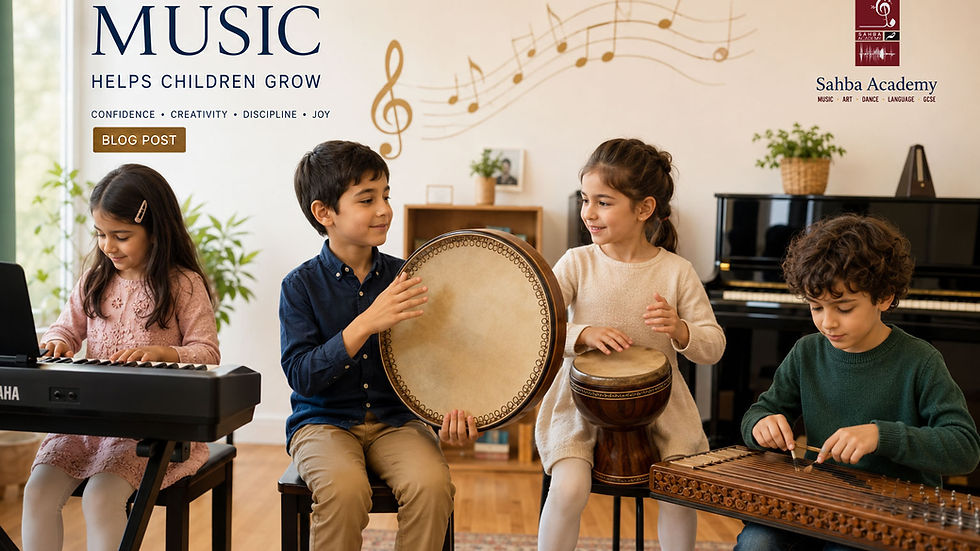
Many children begin learning instruments such as piano or percussion during these years. For those interested in rhythm and group music-making, instruments like the daf can provide an enjoyable introduction to music while developing coordination and listening skills. The most important factor is maintaining a balance between learning and enjoyment.
Ages 7–9: A Strong Foundation for Musical Growth
Between the ages of seven and nine, children often experience significant improvements in concentration, memory, and motor skills. This allows them to:
Learn musical notation
Develop proper technique
Practise longer pieces
Perform with greater confidence
Participate in ensembles and group performances
This is also an ideal age for children to begin exploring traditional Persian instruments such as the daf, tombak, and santur. These instruments connect them with a rich cultural heritage. Many lifelong musicians develop their strongest habits during these years.
What If My Child Starts Later?
Parents are often surprised to learn that many successful musicians did not begin at a very young age. A motivated ten-year-old will often progress more quickly than a younger child who has little interest in music. Success in music depends far more on:
Interest
Enthusiasm
Consistent practice
Encouragement
Quality teaching
It is never too late to begin.
Choosing the Right Instrument
Parents frequently ask which instrument is best for beginners. There is no universal answer. The best instrument is the one that excites your child and encourages them to keep learning. Different children are drawn to different experiences:
Piano develops a broad musical foundation.
Daf introduces rhythm, coordination, and group performance.
Tombak develops timing and hand control.
Santur encourages listening and musical sensitivity.
Singing helps build confidence and musical awareness.
Sometimes, a trial lesson is the best way to discover which path feels right.
Signs Your Child Is Ready for Music Lessons
Your child may be ready if they:
Enjoy listening to music
Like singing or dancing
Show curiosity about instruments
Can follow simple instructions
Can focus on an activity for around 15–20 minutes
Express interest in learning
Remember, readiness matters more than age.
Why Music Education Matters
Music is about much more than learning notes and rhythms. Research consistently shows that music education can help children develop:
Confidence
Creativity
Discipline
Memory
Listening skills
Social skills
Emotional expression
Most importantly, music gives children a lifelong source of enjoyment and self-expression.
Learning Music at Sahba Academy
At Sahba Academy in Manchester, we welcome students of different ages, backgrounds, and experience levels. Whether your child is interested in piano, singing, traditional Persian instruments, art, dance, or creative learning, our experienced teachers provide a supportive environment. Here, children can develop skills, confidence, and a genuine love for learning.
If you are unsure which class would be the best fit for your child, our team will be happy to help you find the right starting point for their musical journey.
The Importance of Community in Music Education
At Sahba Academy, we believe that community plays a vital role in music education. Engaging with others who share similar interests fosters a sense of belonging. It also encourages collaboration and creativity.
When children participate in group lessons or ensemble performances, they learn to work together. They develop social skills and build friendships. These experiences enrich their musical journey and create lasting memories.
Encouraging a Lifelong Love of Music
As we guide children through their musical education, our goal is to inspire a lifelong love of music. We encourage exploration and creativity. We want children to feel free to express themselves through their chosen instrument or art form.
By providing a nurturing environment, we help children build confidence. They learn to take risks and embrace challenges. This positive mindset is essential not just in music, but in all areas of life.
Conclusion: Start Your Musical Journey Today
In conclusion, there is no one-size-fits-all answer to when a child should start music lessons. What truly matters is finding the right fit for your child's interests and developmental stage. At Sahba Academy, we are here to support you and your child on this exciting journey.
If you are ready to explore the world of music together, we invite you to join our community. Let’s inspire confidence and creativity through the joy of music!


Comments